Websites for artists, built and run for you.
Merto builds portfolio-first websites for artists and makers: your work shown large, the story behind it told properly, and commerce that wraps the store you already use instead of replacing it. We run the site for you, month to month, and your domain stays registered in your name.
Why is the algorithm a bad landlord?
Because everything you build on a feed or a marketplace is built on rented ground. These are the four problems working artists bring to us.
Instagram reach is rented
The feed decides who sees your work, and the reach you built can shrink without notice. One account problem and years of audience are gone. A website is the one place where your work shows up because you put it there, not because an algorithm allowed it.
Marketplaces take a cut and set the frame
Selling only through marketplaces means fees on every sale and your work displayed in someone else's grid, next to whatever the algorithm puts beside it. Your pieces deserve their own room, with your story setting the context.
Collectors and galleries look for a canonical home
When a collector, gallery, or journalist looks you up, they expect to find your site: the work, the story, the exhibitions, the way to reach you. If the answer is only a social handle, you read as earlier-career than you are.
Commerce that fights your studio practice
Most website builders want you to run a store: inventory screens, shipping settings, plugin updates. That is time out of the studio. The selling layer should fit how you already work, not replace it.
What does this look like for a working artist?
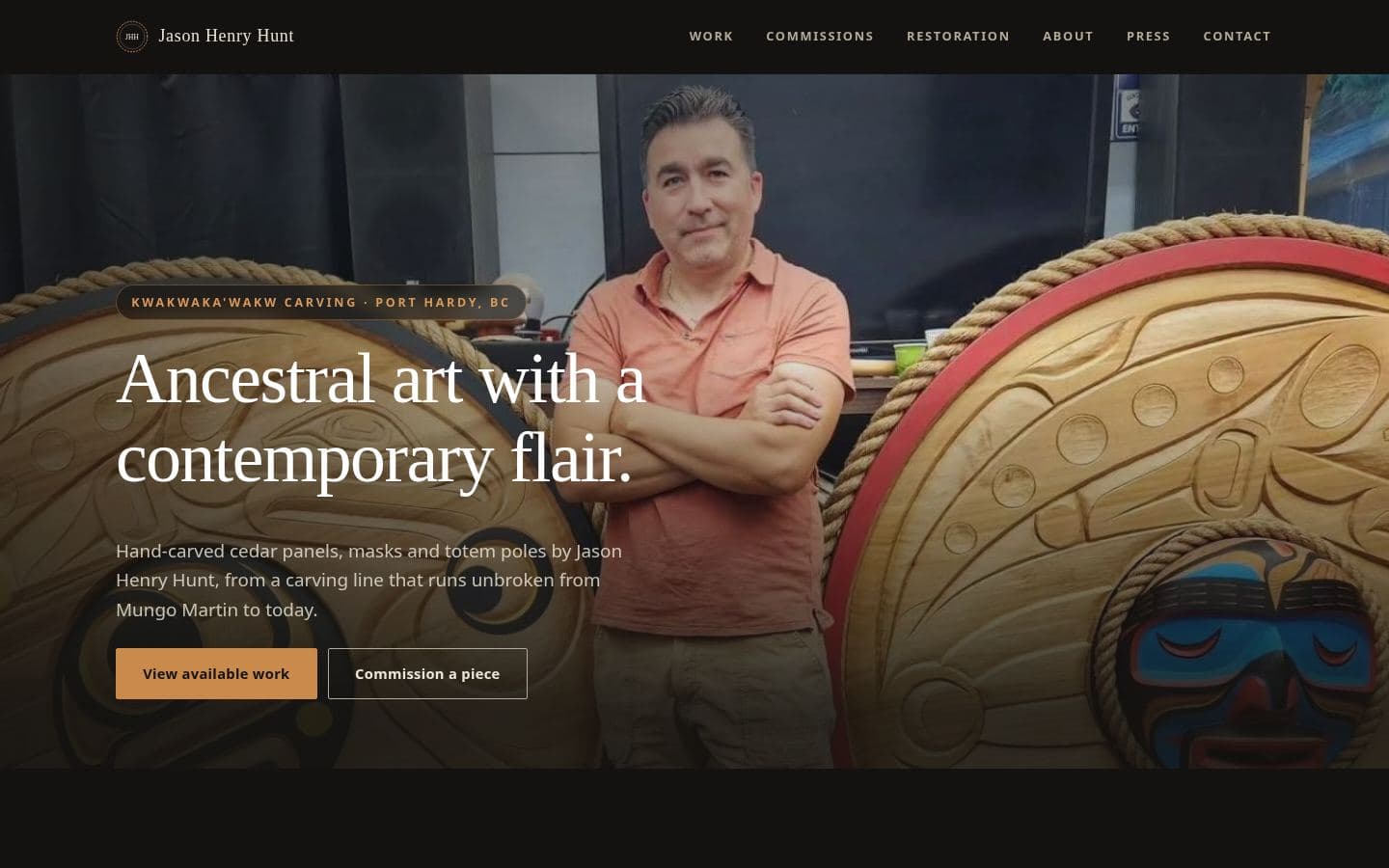
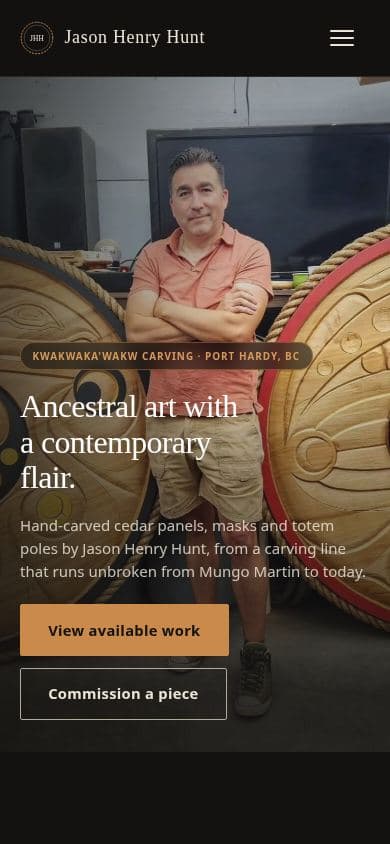
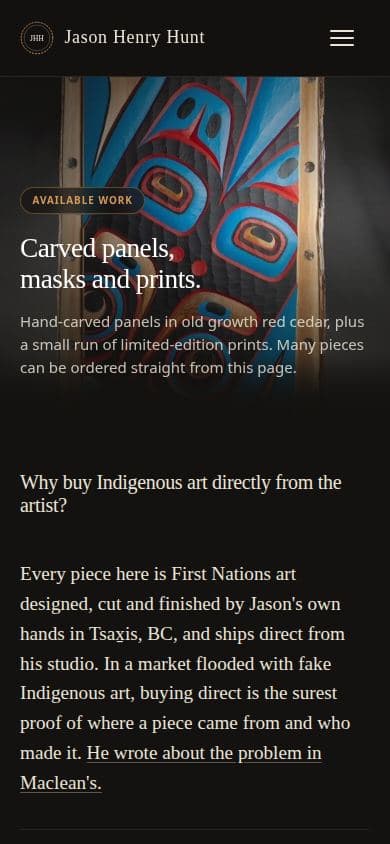
Our artist build is for Kwakwaka'wakw master carver Jason Henry Hunt: sixteen pages wrapped around his existing Square store, with his family's carving lineage told properly.
How do we build around your practice?
The site bends to how you already make and sell work, not the other way around. Three things we do differently for artists.
Designed from your actual work
We do not pour your art into a template grid. The site is designed around your pieces: large, uncrowded, with the photography doing the talking. For carver Jason Henry Hunt we built sixteen pages around his work, including a scroll-pinned timeline of his family's carving lineage.
Commerce wraps what you already use
If you already sell through Square, Shopify, or a gallery, we wrap it instead of replacing it. Jason's site gives each available piece its own page with structured data and a share card, and every buy button goes to his existing Square checkout. His inventory, payments, and payouts did not change.
The story gets real structure
Commissions, process, lineage, press, exhibitions: each gets its own page, with Person and VisualArtwork structured data underneath. That is how search and AI engines learn to connect you, your practice, and your work.

What artists ask us
Can I keep selling through my existing store?
Yes, and we prefer it. For Jason Henry Hunt we wrapped his existing Square store: the site presents each piece on its own page and the buy buttons go straight to his Square checkout, so inventory, payments, and payouts stayed exactly as they were. The same approach works with Shopify or gallery sales.
Is Instagram enough for an artist?
Instagram is good at moments and bad at being your archive. Reach is algorithmic, posts are hard to find again, and the account can be locked or impersonated. Keep posting, but make the website the canonical home the posts point to: the place that holds the full body of work and the way to buy or commission it.
What about commissions?
Commission work gets its own page, not a product listing, because commissioning a piece is an inquiry and a conversation, not a cart checkout. We lay out your process and the questions clients always ask, with FAQ structured data behind it so engines can cite the answers.
Will my site look like a template?
No. We design from your work, so the palette and the pacing come from your pieces, not from a theme. An artist site that looks like a software landing page fails at its one job, which is feeling like the work.
Who owns the website and the domain?
You do. The domain is registered in your name, and if you ever leave, it goes with you along with your content. There is no contract holding the site hostage.
Pricing
No contract. Cancel by text. Keep your domain.
From $247 CAD/month
Custom builds like this one are quoted separately; Foundation starts at the number above.
Jason's 16-page build is documented page by page.
See full pricingWant the longer answers?
Send us your work. We'll design around it.
A preview designed from your actual pieces, before any invoice.
Text for your previewNo contract · cancel by text · keep your domain
On a computer? Text 403-988-7106 from your phone · hi@merto.ai